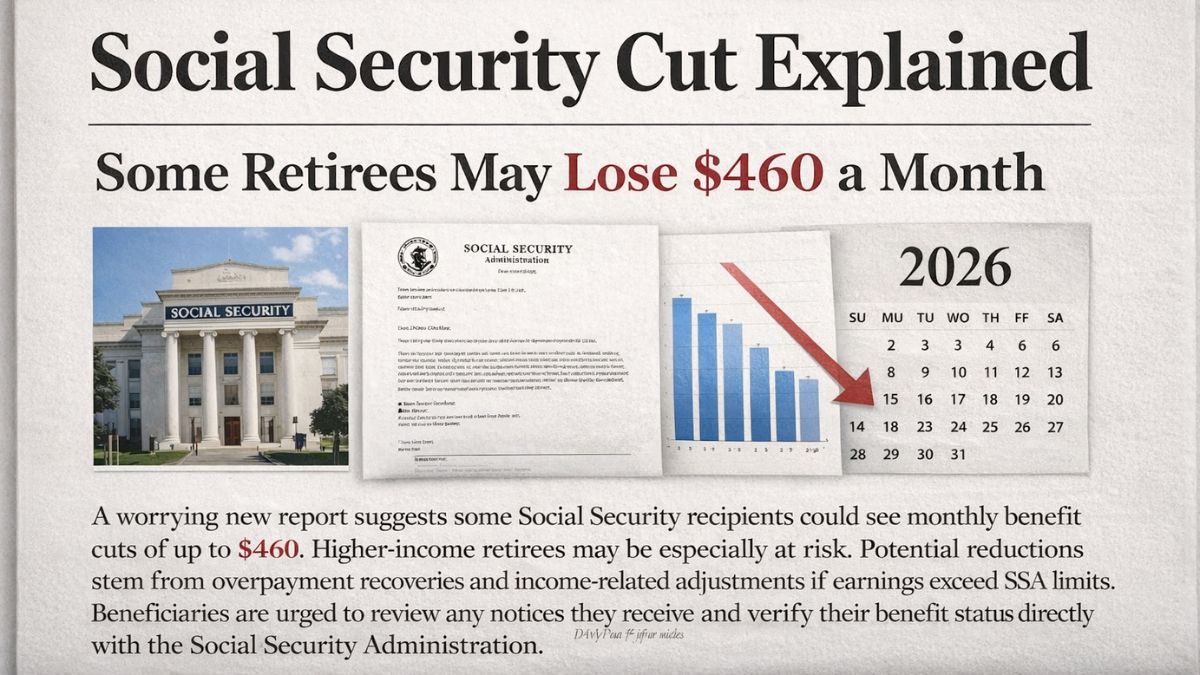
Recent headlines have raised alarm by suggesting that some seniors could see a monthly reduction of up to $460 in their Social Security benefits. For retirees who depend heavily on these payments, even the possibility of a cut can cause serious stress. Many older Americans rely on Social Security as their primary or only source of steady income. A change of several hundred dollars per month could significantly affect housing, food, medical expenses, and other daily costs.
It is important to understand that there has been no universal announcement of a flat $460 reduction for all beneficiaries. Social Security payments do not decrease randomly or without explanation. Any change to benefits typically results from specific individual circumstances or established rules.
Situations That Can Reduce Monthly Benefits
There are several reasons why a person’s Social Security payment might decrease. One common cause is overpayment recovery. If the Social Security Administration determines that a beneficiary was paid more than they were eligible to receive in previous months, the agency may adjust future payments to recover the excess amount. In some cases, these recovery adjustments can feel significant.

Another reason involves income-related rules. Retirees who continue working before reaching full retirement age may see temporary reductions if their earnings exceed certain limits. Once full retirement age is reached, those earnings limits no longer apply, but earlier reductions may have already occurred.
Income from pensions tied to jobs that did not contribute to Social Security can also affect benefits. Certain federal rules may reduce Social Security payments for people who receive non-covered government pensions. These adjustments are not new, but they sometimes create confusion when benefit statements change.
Could High Earners Be Affected More?
Higher-income retirees or individuals receiving maximum benefits may notice larger dollar adjustments if rules apply to their situation. For example, if a person receives a high monthly benefit and is subject to an income-related adjustment, the dollar amount of the reduction could appear larger compared to someone with a smaller base benefit.

However, this does not mean that every high earner will lose $460 per month. The actual amount depends entirely on personal circumstances such as income level, benefit type, and any overpayment corrections.
Disability and Survivor Benefits
Disability recipients and survivor beneficiaries can also experience changes if their income situation changes. For disability benefits, earning income above certain thresholds may trigger review. In some cases, benefits may be reduced or suspended depending on work activity and earnings levels.
Survivor benefits may also shift if a recipient qualifies for multiple benefits at once. Social Security rules require coordination between benefit types, which can sometimes result in adjustments rather than additional payments.
यह भी पढ़े:
 February 18, 2026 IRS Payment Alert! $2,000 Direct Deposit and Eligibility Rules Explained
The Role of Cost-of-Living Adjustments
Cost-of-living adjustments, known as COLA, are designed to increase benefits when inflation rises. These adjustments do not cause benefit cuts. However, confusion sometimes occurs when Medicare premiums increase at the same time. If Medicare Part B premiums rise, the net amount deposited into a beneficiary’s bank account could appear smaller, even though the gross Social Security benefit did not decrease.
This type of change is not a cut in Social Security itself but rather a higher deduction for healthcare coverage.
What Seniors Should Do Now
The most important step is to review your personal Social Security statement carefully. Changes to benefits are always documented in official notices. If you receive a letter about an adjustment, read it closely and verify the details.

If you believe an error has been made, you have the right to contact the Social Security Administration and request clarification. Keeping accurate income records and promptly reporting changes can prevent unexpected adjustments.
For those concerned about budgeting, speaking with a qualified financial advisor can help create a plan that accounts for possible fluctuations. Planning ahead reduces stress and ensures that essential expenses remain covered even if payments change slightly.
Staying Calm and Informed
It is understandable that headlines about a possible $460 reduction create worry. However, there is no across-the-board cut currently announced for all Social Security recipients. Most payment changes are tied to individual income situations, overpayment corrections, or established federal rules.
यह भी पढ़े:
 First 2026 Social Security Payments Arriving This Week: What Recipients Should Review Carefully
Before assuming a reduction will happen, beneficiaries should verify information through official sources. Relying on accurate statements and direct communication from the Social Security Administration is the safest approach.
Understanding how the system works can prevent unnecessary panic. Social Security remains a structured federal program with clear rules. Payment adjustments do not occur without reason, and most beneficiaries will continue receiving their expected monthly amounts unless a specific circumstance applies to them.
Disclaimer
यह भी पढ़े:
 IRS $2000 February 2026 Direct Deposit Claims: Understanding the Truth About the Tariff Rebate Rumor
This article is provided for general informational purposes only and does not constitute financial, legal, or retirement planning advice. Social Security benefit amounts, reductions, and eligibility determinations are based on individual circumstances and official rules established by the Social Security Administration. Beneficiaries should review official SSA communications and consult qualified professionals for personalized guidance.